

Wrong shipping methods can create expensive fulfillment problems for Shopify merchants.
For wholesalers, distributors, bulk-goods sellers, freight-heavy stores, and regulated product merchants, shipping is not just a delivery option. It is part of the store’s operational policy. Some products need freight. Some products must ship ground. Some products cannot go to P.O. Boxes. Some regions may not be supported at all.
But if checkout allows the wrong shipping method, your team has to fix the problem after the order is placed.
The Problem
Many Shopify stores only discover shipping issues after checkout.
The customer places the order. Then the fulfillment team notices something is wrong.
Common examples include:
- Freight-only products using standard shipping
- Heavy items using express shipping
- Hazmat or restricted products not using ground shipping
- P.O. Box addresses used for products that require street delivery
- Orders going to unsupported regions
- Bulk orders using shipping methods that do not match fulfillment requirements
The order may technically be accepted, but it may not be fulfillable as placed.
Why It Happens
Shopify checkout is designed to help customers complete purchases quickly. But shipping rules can be more complex than a standard checkout flow.
A store may need rules based on product type, cart weight, destination, customer type, product restrictions, order size, or fulfillment method.
If those rules are not enforced during checkout, customers may still select shipping options that your team cannot support. That turns shipping policy into a manual review task.
The Consequences
Wrong shipping methods create work across the business. Your team may need to:
- Pause fulfillment
- Contact the customer
- Change the shipping method
- Collect additional shipping fees
- Cancel or refund the order
- Re-route the order
- Handle support tickets
- Deal with delayed delivery expectations
This creates extra cost and a poor customer experience.
A customer should not complete checkout and later be told the selected shipping method does not work. The restriction should be clear before the order is placed.
The Better Approach
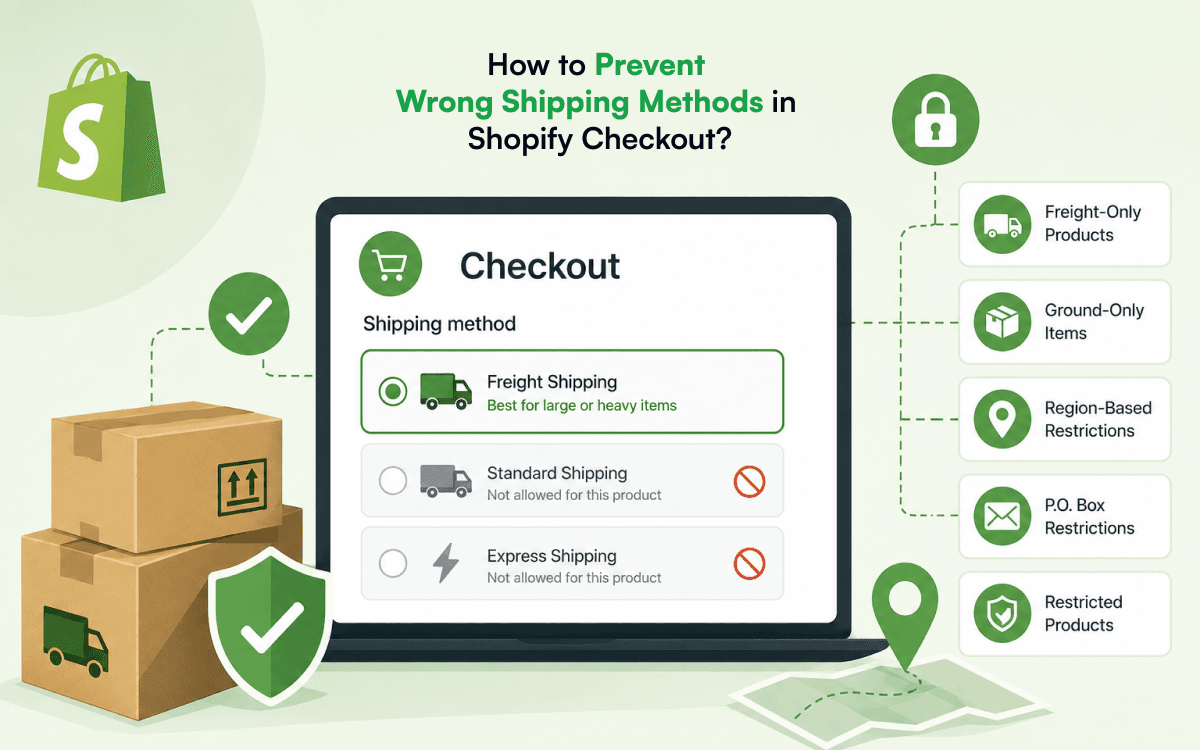
Shipping rules should be enforced during checkout.
- If a product requires freight, unsupported shipping methods should not be allowed.
- If an item must ship ground, checkout should prevent invalid shipping choices.
- If a product cannot ship to a P.O. Box, the customer should be asked to use a valid street address before placing the order.
- If a region is unsupported, checkout should stop the order before payment.
This keeps fulfillment cleaner and prevents shipping problems from becoming manual exceptions.
How CartWisp Helps
CartWisp helps Shopify merchants enforce checkout rules before orders are placed.
For shipping-related workflows, CartWisp can help control:
- Freight-only shipping rules
- Ground-only shipping enforcement
- P.O. Box restrictions
- Region-based shipping limits
- Product-specific shipping restrictions
- Bulk and B2B shipping policies
- Restricted product shipping rules
Instead of relying on manual review after checkout, merchants can validate shipping conditions before the order is accepted.
If an order violates a shipping rule, checkout can show a clear message before the order is placed.
Example:
“This product requires freight shipping. Please select an eligible shipping method to continue.”
Or:
“This product cannot be shipped to a P.O. Box. Please enter a valid street address.”
That is better than fixing the order after the customer already expects fulfillment.
Final Thought
If your team is still correcting shipping methods after checkout, the problem is not just fulfillment. It is checkout validation.
For Shopify wholesalers, distributors, freight-heavy stores, and regulated product merchants, shipping policies should be enforced before orders are placed.
CartWisp helps prevent wrong shipping methods from becoming fulfillment problems.
Book a Demo to see it in action: https://cartwisp.com/demo
Install CartWisp on Shopify: https://apps.shopify.com/cartwisp
#CheckoutValidation #CheckoutControl #CheckoutRules #CheckoutPolicy #CheckoutGovernance #InvalidOrders #OrderValidation #PolicyEnforcement #ShopifyCheckout #ShopifyCheckoutRules #WholesaleEcommerce #ShopifyB2B