

For many Shopify merchants, the real cost of an invalid order is not visible at first. The order appears in the system. Payment may be captured. The customer receives confirmation. Everything looks complete.
Then the operations team notices the problem. The order should not have been accepted.
Maybe the product cannot ship to the customer’s region. Maybe the buyer was not eligible. Maybe the order does not meet minimum requirements. Maybe the selected shipping method is impossible. Maybe the payment method creates unnecessary risk.
At that point, the store is no longer preventing a problem. It is managing one.
The Problem with Reactive Order Management
Many Shopify stores operate reactively. They accept the order first and review problems later.
This often leads to:
- Manual order checks
- Customer emails
- Refunds and cancellations
- Fulfillment delays
- Shipping corrections
- Internal support tickets
- Payment disputes
- Compliance concerns
This approach may work temporarily for small stores, but it becomes difficult to scale.
As order volume grows, product catalogs expand, customer segments become more complex, and stores sell across more regions, manual review becomes inconsistent and expensive.
Invalid Orders Affect Multiple Teams
Invalid orders do not only affect one department. They create work across the business.
- Operations teams need to review and correct the order.
- Support teams need to explain the issue to customers.
- Fulfillment teams need to pause, reroute, or cancel shipments.
- Finance teams may need to process refunds or deal with payment risk.
- Compliance teams may need to investigate restricted product issues.
What started as a checkout issue becomes a company-wide operational problem.
Common Causes of Bad Orders
Many invalid orders happen because checkout does not enforce the merchant’s actual business rules.
Common examples include:
- Wholesale orders below minimum order value
- Customers purchasing products they are not eligible to buy
- Restricted products shipping to unsupported regions
- Oversized products using standard shipping
- Hazardous products using invalid shipping methods
- COD used for high-value or risky orders
- Customers buying too many limited-release products
- Required bundle items missing from the cart
These are not rare edge cases for growing Shopify stores. They are common operational problems.
The Better Question: Should This Order Be Accepted?
Most checkout systems focus on whether the customer can complete payment. But for complex merchants, that is not enough.
Checkout also needs to validate whether the order is acceptable based on the store’s policies.
A better checkout flow should ask:
- Does this order meet minimum requirements?
- Is the customer eligible?
- Can this product ship to this location?
- Is this shipping method valid?
- Is this payment method allowed?
- Are all required products included?
- Does this order create compliance or fulfillment risk?
This is the difference between checkout completion and checkout governance.
Preventive Checkout Enforcement
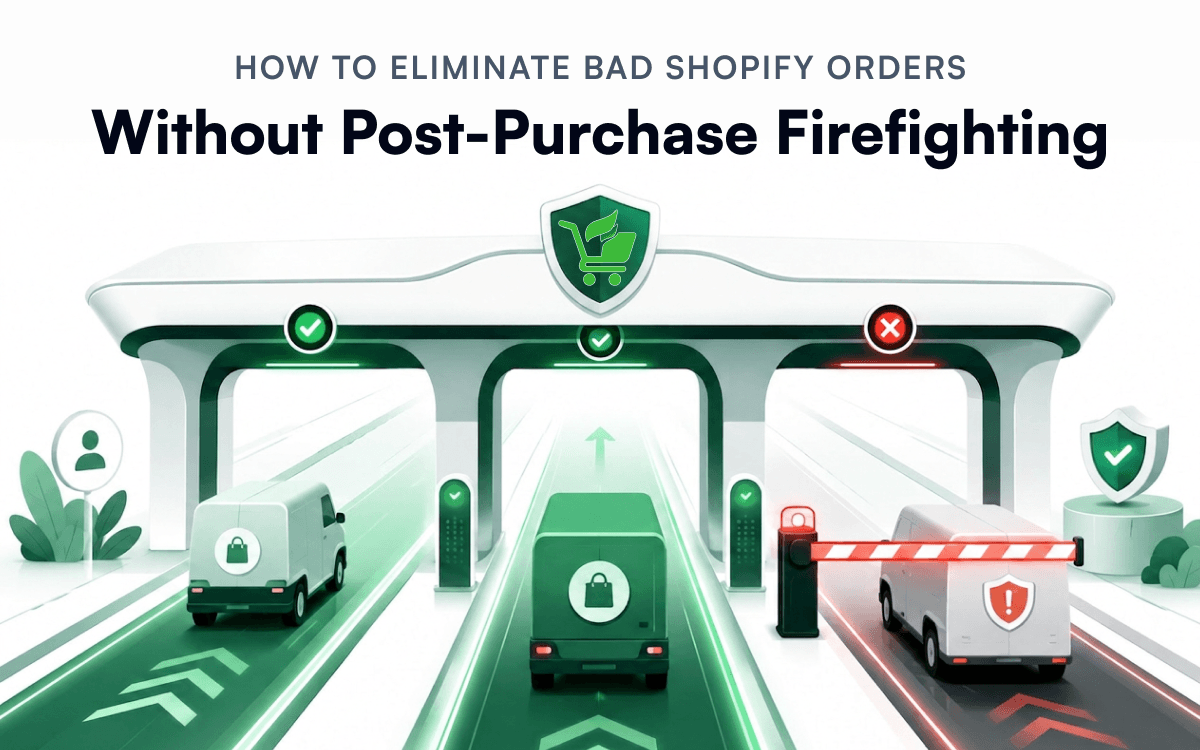
Preventive checkout enforcement means rules are applied before the order is placed.
Instead of allowing the customer to complete checkout and fixing problems later, the store validates the order in real time.
If the order is invalid, checkout can be blocked or guided with a clear message.
For example:
- “Wholesale orders require a minimum order value of $500. Please add more items to continue.”
- “This product cannot be shipped to your selected state. Please remove it from your cart or choose another address.”
- “Cash on Delivery is not available for orders above $500. Please choose another payment method.”
This creates a better experience than accepting the order and rejecting it later.
Where CartWisp Fits CartWisp is launching soon on Shopify as the Checkout Policy Engine built to help merchants prevent invalid, non-compliant, and unfulfillable orders before they are placed.
It helps merchants enforce checkout rules around:
- Cart value and quantity
- Customer eligibility
- Product restrictions
- Shipping regions
- Shipping methods
- Payment methods
- B2B requirements
- Compliance workflows
- Product combinations
The goal is to help merchants prevent invalid, non-compliant, and unfulfillable orders before they enter the fulfillment workflow.
From Manual Fixes to Checkout Control
Fixing bad orders after checkout is reactive. Preventing them before checkout completes is scalable.
For Shopify merchants dealing with B2B rules, regulated products, freight-heavy goods, complex fulfillment requirements, or payment risk, checkout control can reduce manual work and improve operational predictability.
CartWisp is launching soon on Shopify. Stay Tuned.
#CheckoutValidation #CheckoutControl #CheckoutRules #CheckoutPolicy #CheckoutGovernance #InvalidOrders #OrderValidation #PolicyEnforcement #ShopifyCheckout #ShopifyCheckoutRules #WholesaleEcommerce #ShopifyB2B